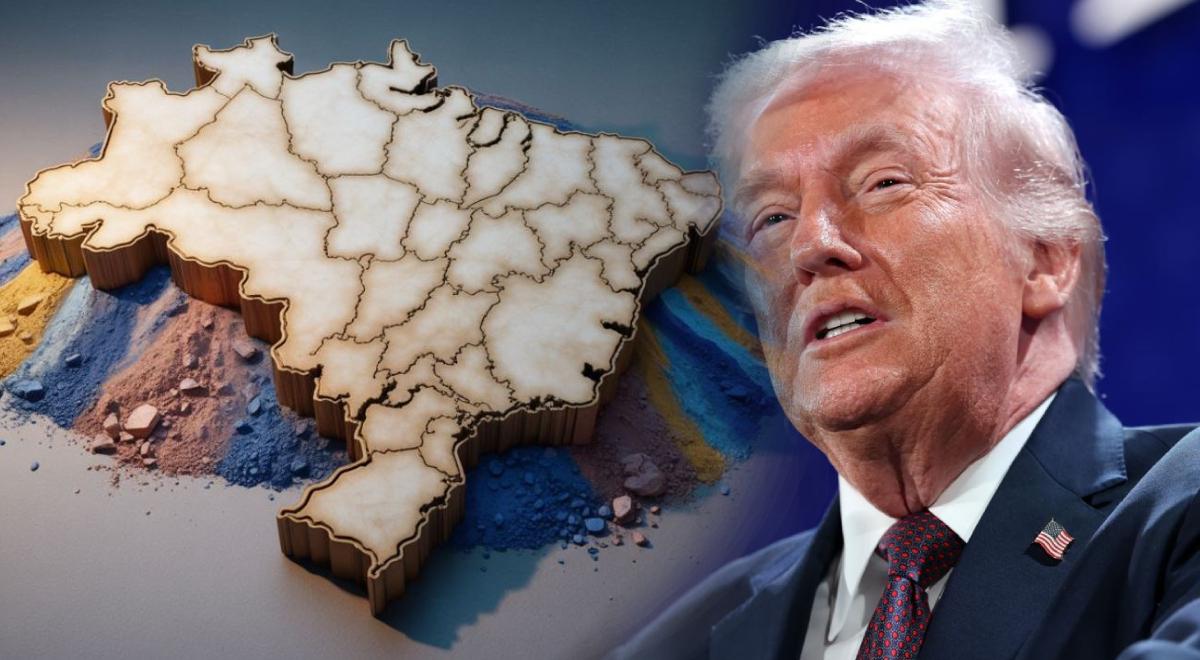
Rare earth elements are poised to define the geopolitical balance of our era, a period dominated by the struggle for global hegemony between the United States and China. While China holds the world's largest reserves of these critical minerals, Brazil is a close second, positioning the South American nation as a potential key ally for Washington in its rivalry with Beijing. **Brazil, home to the world's second-largest rare earth reserves** Consequently, both the White House and the European Union are courting Brasília to secure extraction agreements. Brazil is already a top-ten global producer of nickel, manganese, niobium, iron, and bauxite, and its significance is growing in rare earths, vanadium, copper, lithium, and natural graphite. However, according to Spain's *El País*, President Luiz Inácio Lula da Silva is not easily tempted. Brazil has serious ambitions to participate in the full value chain of these resources, rather than merely administering their extraction. The government recognizes these elements are crucial for the energy transition, powering everything from electric vehicles to wind farms. A PwC report states China possesses 44 million tonnes of the 17 elements classified as rare earths, followed by Brazil with 21 million and India with 7 million. Brazil also holds a significant share of other key resources: graphite (26% of global reserves), niobium (over 90%), nickel (12%), and lithium (5%). Estimates suggest that by 2040, global demand for graphite could quadruple, while demand for rare earths may triple. Yet a major challenge for Brazil is its industrial focus, which has remained almost exclusively on extraction and export, leaving the higher-value processing of these minerals to other nations.